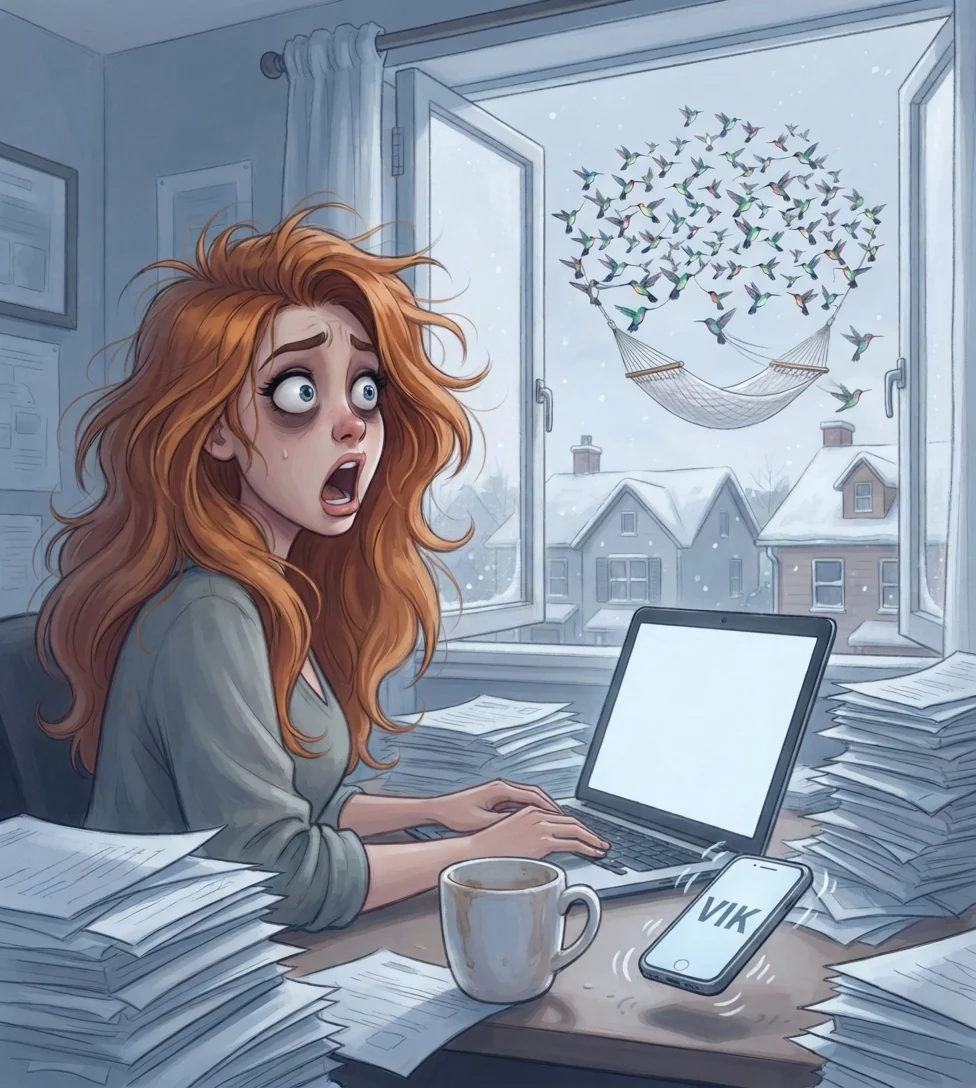

How do I stop being on alert all the time?
Peace bunker
15 minutes with nothing to sort out. It’s the “nothing to sort out” that heals.
“Tonight, zero explosions. I think I’m becoming civilised.”
Chapter 23 — Jazz, Dark Side
When it happens to you
You’re always on alert. Even in the evening. Even when nothing’s happening. Your body stays at its post, waiting for something, and you don’t even know what any more.
Why reassuring yourself isn’t enough
A body that has kept watch for a long time doesn’t stop because you tell it it’s over. It stops because you prove to it, every day at the same time, that nothing is happening. It’s proof by repetition, not by reasoning.
Rule
Safety isn’t something you decide. It’s something you repeat.
How to set up your quarter of an hour, in 4 steps
- 15 minutes, always at roughly the same time. The time matters more than the content.
- Soft music, a hot drink, low lighting. And that’s it.
- What’s banned: screens, discussions, decisions, to-do lists. Nothing to sort out — it’s precisely the fact that there’s nothing to sort out that heals.
- If someone knocks: “This is my peace bunker. If you knock, I’ll answer — after my herbal tea.”
⚠ 15 minutes, not an hour
An hour, you won’t manage three evenings in a row. A quarter of an hour, you will. It’s the repetition that counts, not the length: the body learns from the number of times, not the time spent. And if the alert doesn’t go down at all after several weeks, it’s not an exercise you need, it’s someone to talk to.
What it changes for you
You get your evenings back. And your body ends up lowering its guard elsewhere too — that’s what surprises people most: you set up 15 minutes and the whole day comes down a notch.
How to practise
Three weeks in a row, without skipping. Tick off the evenings on a calendar: it’s silly, and it’s what keeps you going, because you can see the streak.
Remember
Safety isn’t something you decide. It’s something you repeat.
You may be wondering
I haven’t got 15 minutes.
Then take five, but every evening. 5 minutes repeated are worth more than an hour once a week.
I get bored and reach for my phone.
That’s exactly the moment the exercise is working. Boredom is what a body on alert feels when it’s given nothing to watch. Let it pass, it lasts a few evenings.
Does it work in the morning too?
Yes, but pick one and stick to it. The routine is the active ingredient.