How do I stop replaying the same scene?
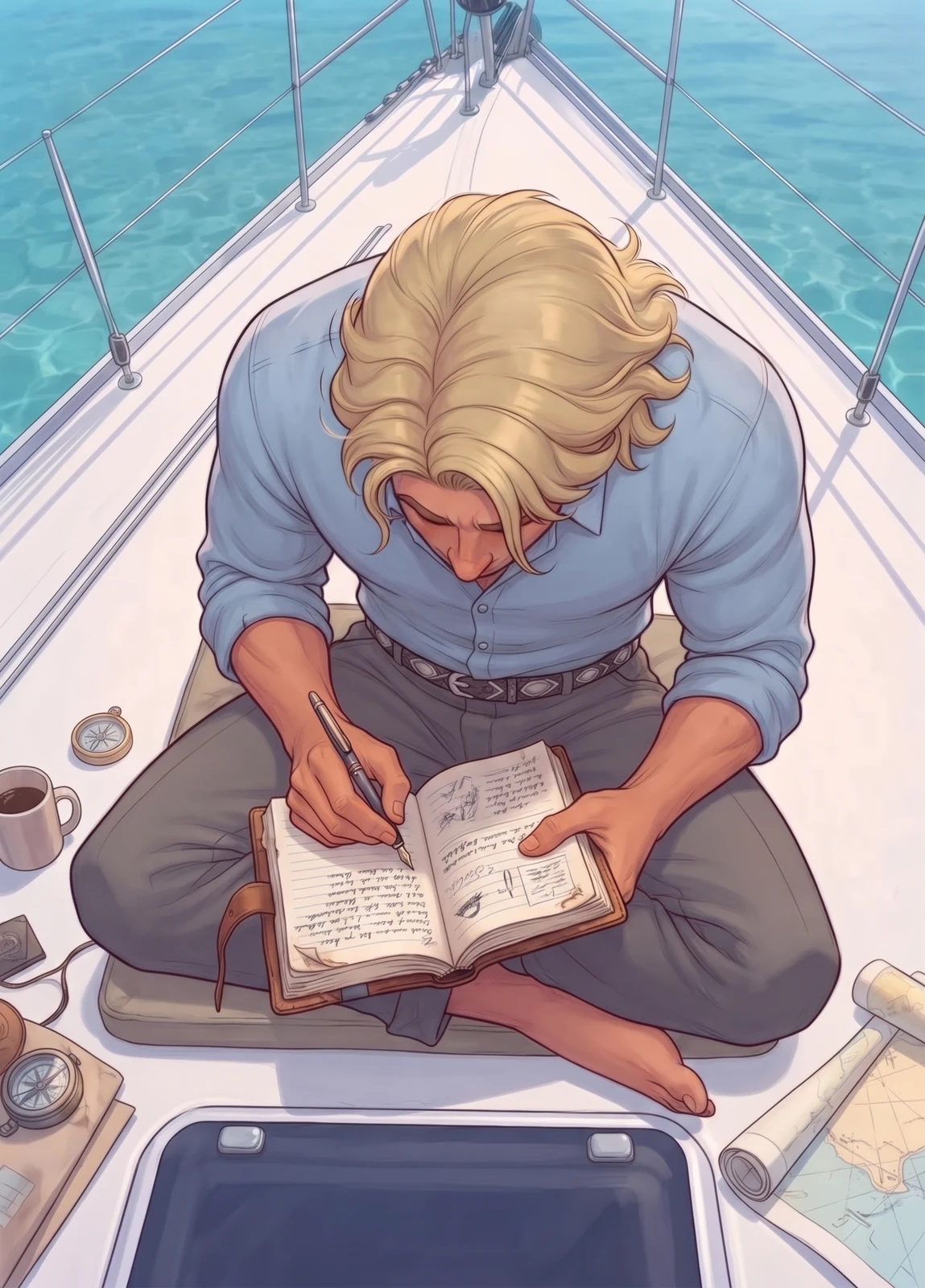
If you don’t have clarity, write
It isn’t therapy. It’s a sorting technique.
When it happens to you
A conversation went badly. It ended 3 days ago, and yet it carries on: you redo the dialogue in the shower, you find the right answer at midnight, you fall asleep with it, you wake up with it.
You try to move on. It comes back. You try to talk about it. You’re told “let it go”, and it won’t go.
Why it goes round on a loop
An unwritten thought has no beginning and no end: it replays endlessly because nothing signals that it’s been dealt with. It takes up room and stays blurry — and as long as it’s blurry, it seems enormous.
Writing it down doesn’t make it disappear. It gives it edges. And what has edges has a size: often much smaller than you thought.
How to do it, in 4 steps
- Write the scene as it happened. No analysing, no explaining, no looking for who was wrong. What was said, what was done. 10 minutes, non-stop, without rereading.
- Underline the sentence that sticks. There’s almost always just one — not the whole scene. That’s the one going round, not the rest.
- Rewrite the same scene as a comedy. Same facts, but you exaggerate: give the characters a ridiculous nickname, add a voice-over, imagine it’s a TV series. This is the step that does the work — not because it’s funny, but because it forces you to look at the scene from the outside.
- Close the notebook. You don’t reread, you don’t correct, you show nobody. The session is over.
⚠ What this guide is not
It isn’t therapeutic writing, and it doesn’t replace anyone. The aim isn’t to heal from something: it’s to get a scene out of your head so you can decide what to do with it.
And there’s a moment when the exercise isn’t right: if writing the scene puts you in a worse state than before, stop and close the notebook. Some things need someone in front of you, not a page.
Finally, turning it into comedy doesn’t mean playing it down. It means changing seats: you go from inside the scene to in front of it. What happened is still what happened.
What it changes
The loop stops, usually that very evening. And you get back something unexpected: once the scene is written as comedy, you can finally see what you want to do with it — talk about it, let it go, or set a limit. As long as it was going round, you couldn’t decide anything at all.
To practise
Once a week, on a tiny annoyance: the queue, the snide remark, the missed appointment. You practise on the small ones, so it’s there for the big ones.
2 guides that go with it:
The comedy journal — for what couldn’t be said.
Write the worst possible version — when the page stays blank.